
Rethinking Your Dog’s Bowl This Spring
Spring is a great time to reset routines, including your dog’s bowl. What you feed affects energy, skin, digestion, and long-term health.
In the pet food aisle, “natural dog food” is everywhere, alongside raw, dehydrated, freeze-dried, canned, and more. It is easy to feel overwhelmed and default to the same kibble.
This guide breaks down what “natural” really means on a label, how it compares to kibble, and how processing changes what ends up in the bowl. We also explain why balanced raw food is often the best choice, and how partial raw feeding can still deliver real benefits when 100 percent raw is not realistic. At Rebel Raw, we make complete, balanced raw meals from 100 percent USDA human grade ingredients because quality matters over time.
What Natural Dog Food Really Means (and What It Doesn't)
Natural sounds clear, but on pet food labels it is broad. AAFCO says natural ingredients come from plant, animal, or mined sources and undergo only limited processing, yet plenty of gray areas remain.
A kibble bag can say “natural” and still be:
- Ultra-processed into dry pellets
- Made with powdered, highly refined ingredients
- Finished with added vitamins and minerals
Front-of-bag claims are marketing. The ingredient panel tells the truth.
Think of “natural dog food” as a spectrum:
- Highly processed natural kibble designed for shelf life
- Gently cooked foods that are less processed than kibble
- Raw, species-appropriate diets built from meat, organs, and edible bone
Raw sits at the least processed end, keeping more natural moisture and nutrients. Even moving partway toward fresher food can help, one raw meal a day, a topper, or several raw meals per week.
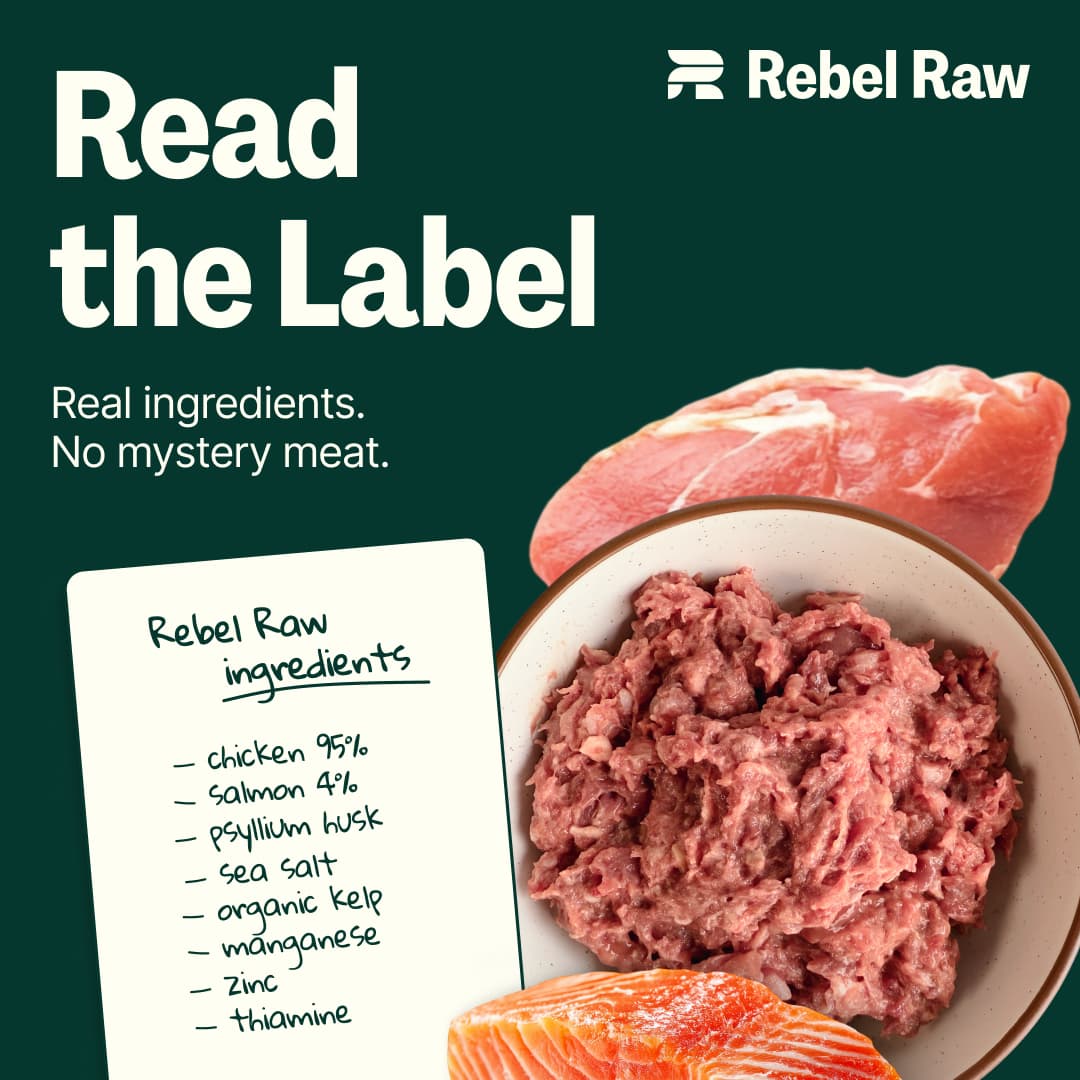
When you read a label, ask:
- Are the first ingredients recognizable (beef, chicken, turkey heart)?
- Or vague (meat meal, animal fat, by-product)?
- Is there a long list of added vitamins at the end to replace what processing removed?
Natural dog food should read like food, not a chemistry list.
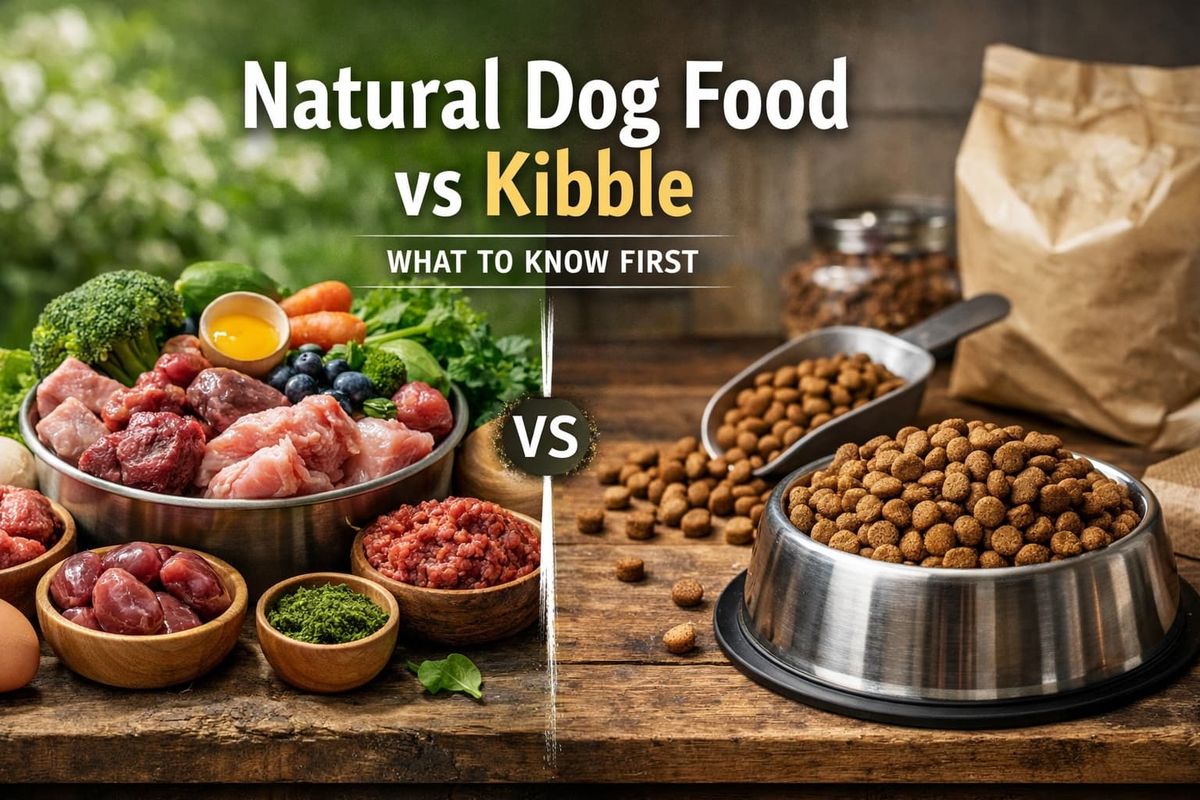
Kibble Vs. Real Food: How Processing Impacts Your Dog
Kibble is convenient, but it is heavily processed. Ingredients are ground into a slurry, cooked at high heat, then extruded into crunchy pieces.
High heat and processing can:
- Destroy natural enzymes that support digestion
- Reduce heat-sensitive vitamins and amino acids
- Oxidize fats, making them harder on the body
- Require vitamin/mineral premixes added after cooking
Balanced raw meals aim to keep food closer to its original form:
- Whole meat and organ meat
- Finely ground raw bone for calcium and minerals
- Natural moisture that supports digestion and urinary health
This is why raw often outperforms kibble: proteins and fats stay closer to their natural state, and nutrients are delivered in a form dogs can use well. Many people notice easier digestion, steadier energy, less gas, and better stools.
Some dogs seem “fine” on kibble, but thriving can look like:
- Steady energy
- Shinier coat and calmer skin
- Smaller, firmer stools
- Healthier weight and muscle tone
If fully raw is not possible, adding real food still helps. One raw meal, mixing raw with kibble, or feeding raw a few days a week can improve digestion, stool quality, and energy.
Why Raw Food Is a Superior Choice
Balanced raw diets are built around what dogs are designed to eat: muscle meat, organs, bone, and species-appropriate fats. That makes raw a stronger foundation than kibble for many dogs.
Key advantages can include:
- More bioavailable nutrients (not degraded by high heat)
- Higher moisture to support kidneys, bladder, and digestion
- Less reliance on synthetic vitamin sprays to meet standards
- Better fat quality to support skin, coat, and joints
Because dogs often get more from each bite, many families see:
- More stable energy for play and training
- Leaner muscle with less excess body fat
- Less dependence on starch-heavy fillers
When it fits your budget, storage, and lifestyle, a complete raw diet is often the superior option.
Is Natural Dog Food Really Better for Health?
No food guarantees perfect health, but many dogs improve when they move toward fresh or raw food.
Digestive benefits often include:
- Smaller, less smelly stools
- Less gas and belly gurgling
- Better nutrient use
Skin and coat may improve with better fats and proteins:
- Less itching
- Softer, shinier coat
- Less flaky skin and sometimes less shedding
Some dogs also benefit in oral health. Chewing meaty raw bones (as part of a balanced plan) can help reduce buildup and support fresher breath. It is not a substitute for brushing, but it is more natural chewing than small kibble pieces.
Energy and weight can also level out when dogs eat more species-appropriate food with fewer heavy carbs.
Signs your dog may benefit from a change:
- Ongoing itching or paw licking
- Frequent loose stools
- Recurring ear gunk or strong odor
- Trouble maintaining a healthy weight
If a full switch feels like too much, partial raw still counts. Even a few raw meals per week can support gut health, skin, and energy.
How to Safely Transition to Natural Dog Food This Spring
A gradual transition helps your dog’s gut adjust. A common full-switch plan:
- Week 1: 25% new, 75% old
- Week 2: 50% new, 50% old
- Week 3: 75% new, 25% old
- Week 4: 100% new (slow down for sensitive stomachs)
For partial raw feeding, you can use the same gradual approach. Practical options:
- 25% raw / 75% kibble daily (mixed or separate meals)
- 50/50 (raw for one meal, kibble for the other)
- 75% raw / 25% kibble (kibble as backup or travel option)
- Raw toppers to add moisture and fresh nutrients at lower cost
During the switch:
- Keep meal times consistent
- Avoid adding new treats or table scraps
- Start with one protein (chicken or beef)
- Watch stools; vomiting or watery diarrhea that continues is a reason to call your vet
Raw safety depends on sourcing and handling. Using 100 percent USDA human grade ingredients helps reduce risk. At home, wash hands, clean bowls, and avoid cross-contamination.
Balance matters as much as safety. Dogs need the right mix of muscle meat, organ, bone, and key nutrients. DIY raw can create gaps, so complete and balanced formulas are a smarter base for most households, especially for partial feeding.
How Partial Raw Feeding Still Helps
A 100 percent raw diet offers the biggest shift away from ultra-processed food, but partial raw feeding can still deliver meaningful benefits at a lower daily cost.
A partial raw diet may help through:
- Better hydration from raw’s natural moisture
- More digestible animal protein alongside kibble
- A gradual transition that supports gut health
Cost-saving ways to do partial raw:
- Feed raw for the meal before your dog is most active
- Feed raw three to four days per week
- Use balanced raw toppers instead of full raw portions every meal
Each step toward more fresh, raw food can move your dog closer to the benefits of a fully raw diet while staying realistic about budget and storage.
Making Real Food Easy for Better Bowls
Not all natural dog food is equal. What matters is how close it is to real, species-appropriate nutrition with minimal processing. When you audit your dog’s food, ask:
- Are the first ingredients real foods you recognize?
- How heavily is it processed?
- Are there vague terms like by-product, or long vitamin lists to replace lost nutrients?
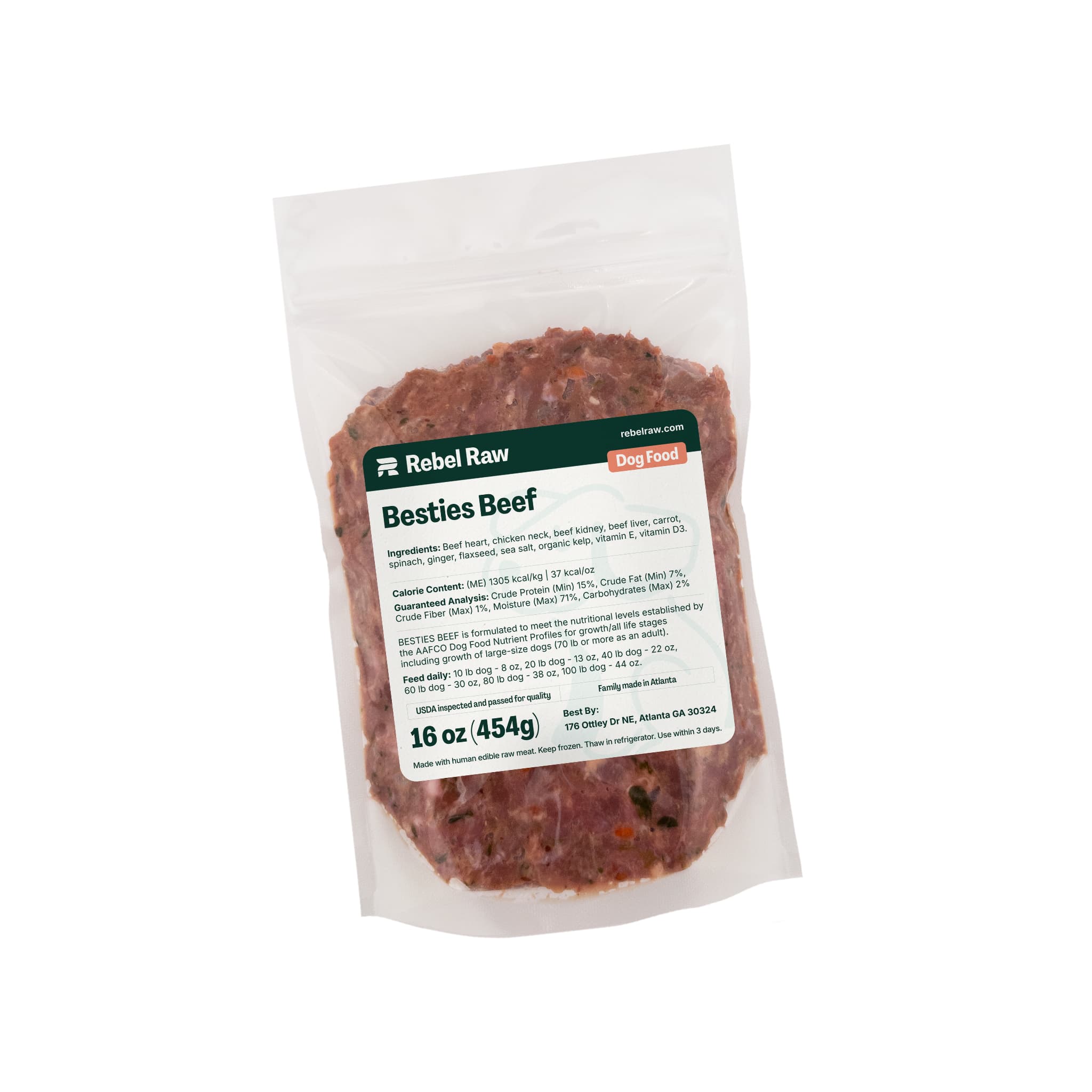
At Rebel Raw, we make it simple to feed complete, balanced raw meals made from 100 percent USDA human-grade ingredients. Our frozen, portioned packs show you exactly what you are feeding and ship frozen to your door. You can start small, one raw meal a day, mixing raw with kibble, or rotating a few raw meals each week.
This spring, consider freshening up the bowl. Even a partial move toward fresh, raw meals can support better day-to-day health over time.
Help Your Dog Thrive with Fresh, Real Food
Give your dog clean, species-appropriate meals with our natural dog food. We handcraft complete, balanced raw recipes in small batches using raw, human-grade ingredients you can recognize. Rebel Raw makes it simple to transition from kibble to fresh meals, whether you feed fully raw or use partial raw to support digestion, energy, and overall health. Explore our options today and build a bowl your dog will be excited to eat.