
Know Exactly What Is in Your Pet’s Bowl
Reading raw pet food labels can feel confusing. You want to give your dog or cat fresh, real food, but the package is packed with tiny words, strange terms, and big claims. That matters even more as the weather warms up and food safety is on your mind. When you know how to read a label, you can feel calm about what you are serving.
Here at Rebel Raw, we care a lot about making labels clear and honest. By the end of this piece, you will know how to read ingredient lists, understand common claims, spot safety info, and see how different brands handle quality. You do not need to be a nutrition expert; just a few simple label-reading skills can help you make smart choices for your dog or cat.
Ingredients First: Reading the Fine Print
The ingredient list is your best friend. Ingredients are listed in order by weight, including water. In raw food, that means high-moisture meats at the top are a good sign, like beef, chicken, turkey, or duck.
Be careful when you see:
- Carbs or starches listed before any meat
- Vague words like “meat by-products” without saying what animal
- Catch-all terms like “animal digest” or “meat meal” with no clear source
Raw food should be built around real, named meats. Clear wording like “beef heart,” “chicken liver,” or “duck gizzards” tells you exactly what your pet is getting. That kind of detail shows the company is not hiding anything.
You may also see the words “human-grade” or “USDA” on some raw products. Human-grade means the ingredients meet the same basic standard used for food made for people, not lower feed-grade material. USDA inspection helps support safe handling from meat plant to bowl. When a company cares about sourcing, they usually care about the rest of the recipe too.
Decoding Raw Pet Food Claims and Buzzwords
Many packages use strong language, but not all claims mean the same thing. One of the most important phrases is “complete and balanced.” This should mean the food meets AAFCO nutrient profiles for dogs or cats for a certain life stage, like growth for puppies and kittens or adult maintenance.
- A clear statement about which species the food is for
- Which life stage it is made for
- The words “complete and balanced” tied to AAFCO
If the label says “for intermittent or supplemental feeding only,” that means it is not meant as a full meal every day. That can still be fine for treats, toppers, or variety, but not as your pet’s sole source of nutrition.
Raw food labels may also mention HPP, which stands for high-pressure processing. Some brands use HPP to lower bacteria by treating the food with very high pressure. That process can change texture and may affect the natural feel of the food. At Rebel Raw, we take a different path and do not use HPP. We focus on careful sourcing, clean handling, small batches, and freezing the food to keep it safe and fresh.
Watch out for buzzwords like “natural,” “holistic,” or “gourmet.” These can sound nice but do not tell you much about nutrition. The real clues live on the back of the package, in the ingredient list and the nutritional adequacy statement.
Breaking Down the Guaranteed Analysis Panel
The guaranteed analysis box is where you see the little percentages. It usually lists crude protein, crude fat, crude fiber, and moisture. “Crude” here is just an old lab word. It does not mean poor quality. It means the basic way those parts are measured.
Raw food labels will show higher moisture than dry kibble, because real meat holds a lot of water. That is why comparing numbers straight across can be tricky. A raw product and a dry product will not look the same on paper, even if the raw food is richer in protein in real life.
To compare foods, many people like to look at “dry matter,” which means taking out the water and just comparing what is left. You do not need to do the math every time, but it helps to know that:
- Higher protein on a dry matter basis usually supports strong muscles
- Fat gives energy and can help with a glossy coat
- Fiber helps digestion, but dogs and cats do not need high fiber like people do
Every pet is different. A very active dog may do well on more fat, while a chill house cat might need a bit less. If your pet is a senior or has a medical condition, this is a good place to loop in your vet and match the numbers to their needs.
Hidden Red Flags and Green Lights on Raw Labels
Raw food should be mostly meat, bone, and organs, with maybe some produce for extra nutrients. So when you see long lists of carb-heavy fillers, that is a sign to slow down and read closer.
Red flags can include:
- Corn, wheat, soy, rice, or added starches in large amounts
- Added sugars like syrup or molasses
- Artificial colors, flavors, or chemical preservatives
Dogs and cats do not need dyes to enjoy their dinner. They care about smell and taste, not color.
On the positive side, named organ meats are a green light. Liver, kidney, heart, and other organs are rich in natural vitamins and minerals that support a balanced raw diet. Safe bone, usually listed as “ground bone,” helps supply calcium and phosphorus. Unclear terms like “bone meal” without naming the animal can be less transparent.
You may also see extra ingredients like fish for omega-3s, or added vitamins and minerals. These can be helpful when they are used to round out a carefully built recipe. But when the ingredient list looks like a long chemistry set, it can hint that the base ingredients alone are not very balanced.
How Rebel Raw Labels Make Raw Feeding Stress-Free
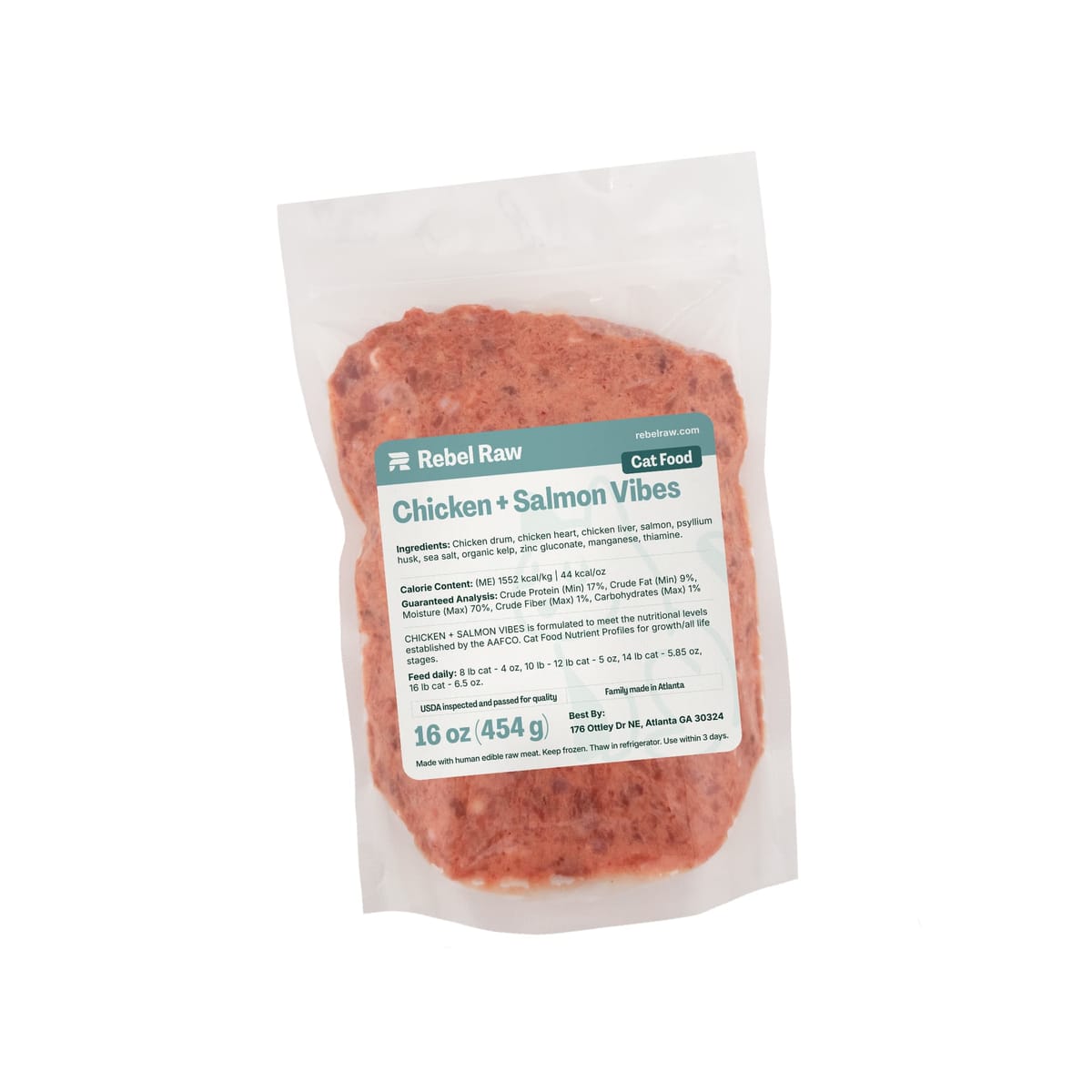
At Rebel Raw, we try to make our labels read like a simple recipe you could make in your own kitchen in Atlanta, if you had the time and the freezer space. You will see clear meat names, organ meats, and produce you recognize. We craft complete and balanced meals for dogs and for cats that follow a species-appropriate approach, so you know the recipe is built for how they are meant to eat.
What you see is what you get. If the label says beef heart, it is beef heart. If it says chicken liver, it is chicken liver. We keep the ingredient lists short and honest, with no fillers, no preservatives, and no HPP. We use "bacteriophaging", a natural process that eliminates harmful bacteria while maintaining beneficial bacteria and nutrient quality.
We make our food in small batches using 100 percent USDA human-grade meats and produce, then freeze it to lock in freshness and support safety, which is especially helpful when spring temperatures rise. Our labels also include simple handling tips, like how to store, thaw, and serve, so you can feel relaxed feeding raw food at home.
Once you learn to read labels this way, it becomes a habit. Grab a package you already have, look at the top three ingredients, check for a clear AAFCO statement, and skim the guaranteed analysis. Then compare that to a Rebel Raw recipe and notice how the wording, the ingredients, and the overall feel line up with what you now know about real, raw food.
Give Your Pet the Fresh, Species-Appropriate Nutrition They Deserve
If you are ready to move beyond highly processed kibble, we are here to make the switch simple and safe. At Rebel Raw, we carefully craft each recipe so your dog or cat gets real, biologically appropriate ingredients in every meal. Learn why our raw pet food supports healthier digestion, shinier coats, and more stable energy. Start today with a transition plan tailored to your pet’s age, size, and activity level.