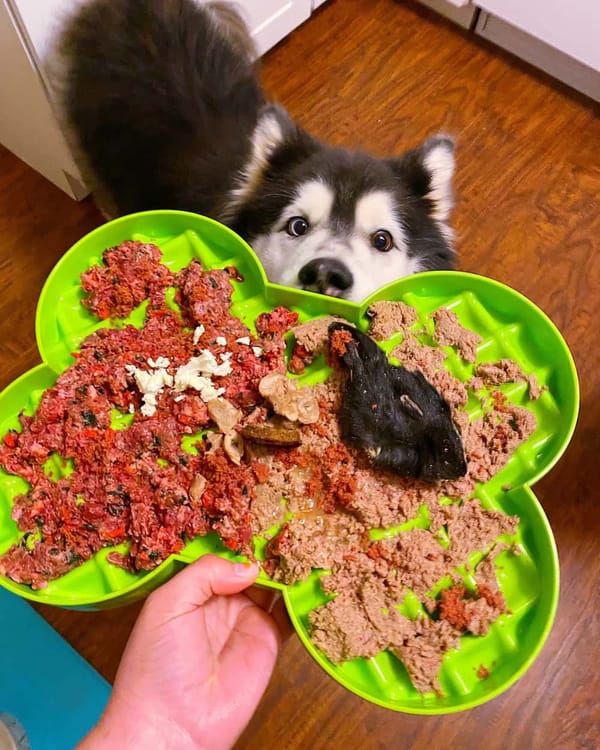

A raw diet for cats comes down to one simple idea: feeding fresh, real food that makes sense for a cat’s body. Instead of ultra-processed kibble or mystery-meat cans, a raw diet focuses on meat, organs, and bones that mirror what cats are naturally built to eat. If you are curious about why so many cat parents are rethinking what is in the bowl, you are in the right place.
At Rebel Raw, we craft 100% USDA human-grade raw meals for cats because we believe nutrition should be both species-appropriate and practical for real life. In this article, we will walk through what a raw diet for cats actually is, the benefits many cat parents notice, how to know if it might be right for your cat, and how to get started safely without guilt or overwhelm.
Why More Cat Parents Are Turning to Raw Food
More people are reading ingredient labels and asking harder questions about heavily processed cat foods. It is natural to wonder if a dry pellet or a thickened slurry in a can is really the best option for an obligate carnivore that is wired to eat meat.
When we talk about a raw diet for cats, we simply mean fresh, uncooked food based on real animal ingredients. That typically looks like a mix of muscle meat, organs, and bone, often with carefully chosen additions to meet full nutritional needs. It is still everyday food, just closer to what your cat would eat in nature.
Cat parents are especially drawn to raw when they notice things like picky eating, dull coats, constant vomiting, or chronic loose stools. The goal is not perfection; it is progress. Our focus here is practical: what a raw diet for cats involves, why it can help, and how to make changes gently and safely.
What a Raw Diet for Cats Really Is
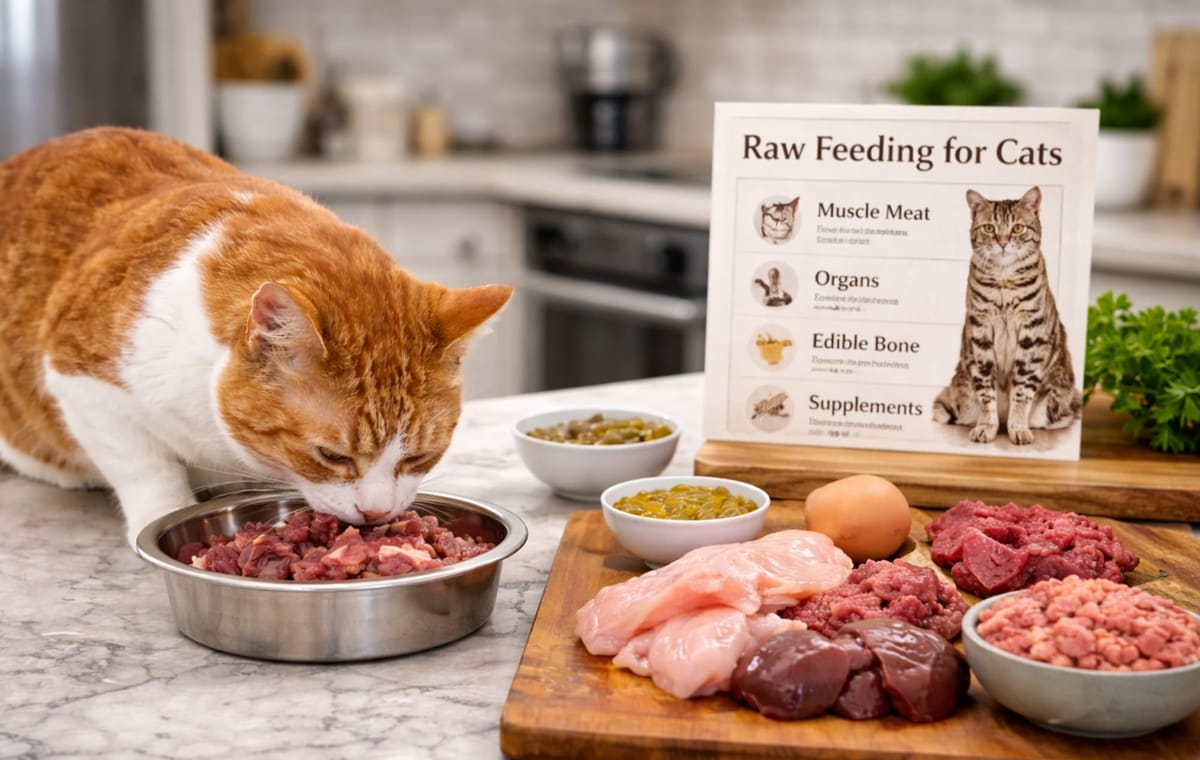
A true raw diet for cats is centered on animal protein. Cats are obligate carnivores, which means their bodies run on meat, not plants. A well-designed raw meal typically includes:
- Muscle meat for protein and amino acids
- Organs like liver for vitamins and minerals
- Edible bone for natural calcium and phosphorus
- Carefully selected extras to round out nutrients
There are two main approaches people take:
- DIY raw: You buy ingredients, weigh them, grind or chop, and build your own recipes. This gives control, but it also puts all the math, food safety, and balancing on your shoulders.
- Premade raw: Ready-made complete recipes that are formulated to be balanced for everyday feeding, so you scoop and serve.
At Rebel Raw, our meals are 100% USDA human-grade, which means the ingredients meet the same inspection standards as food produced for people. When we say complete and balanced, we mean each recipe is created to provide the full spread of essential nutrients so you can feed it every day, not just as a treat. This kind of formulation matters because long-term health depends on more than just meat; it depends on the right nutrients in the right proportions over time.
Key Benefits Cat Parents Often Notice on Raw Food
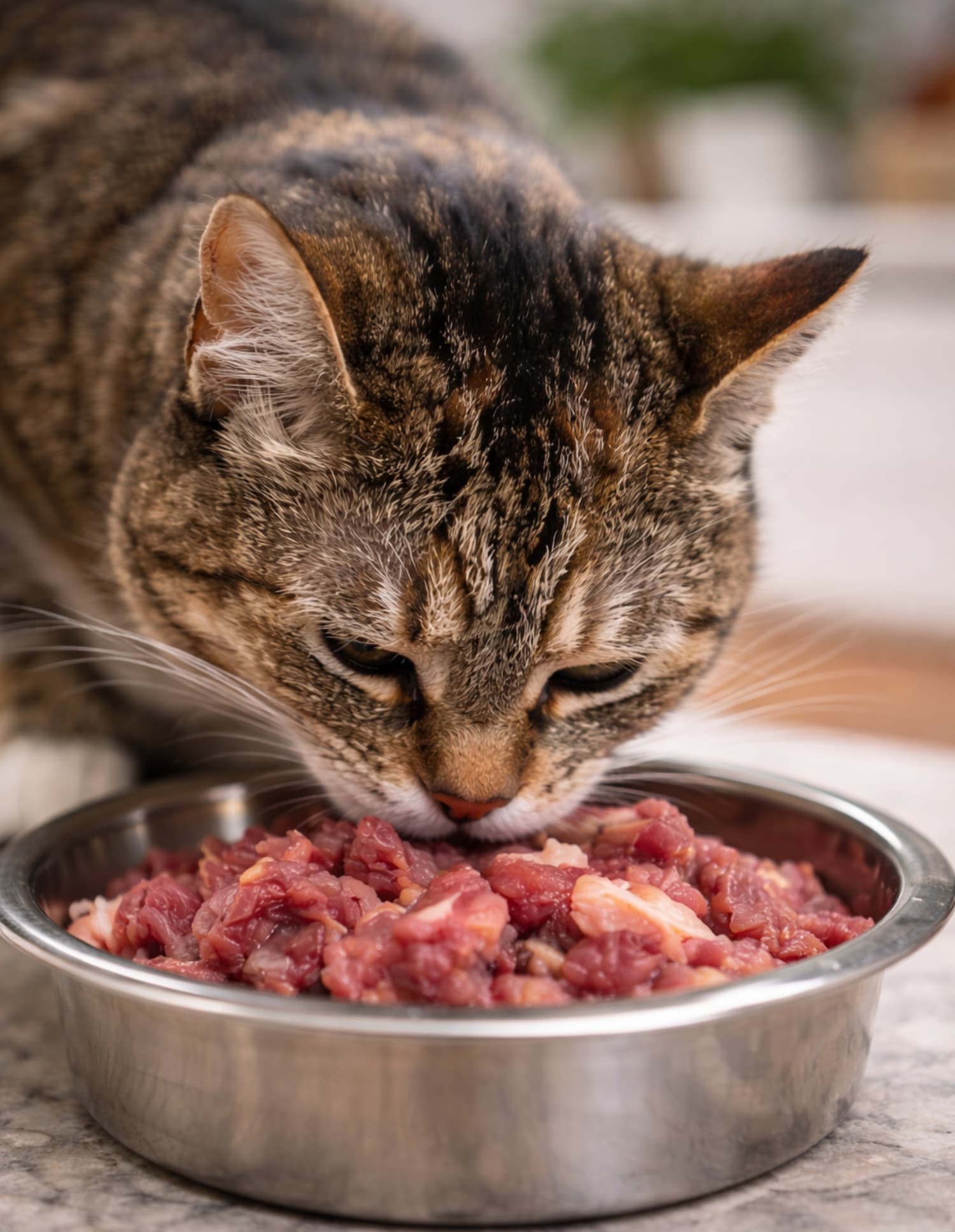
Every cat is an individual, but there are common changes many people see when they switch to a well-balanced raw diet.
Digestion and litter box:
- Smaller, firmer stools that are easier to scoop
- Less odor from the litter box
- Fewer bouts of soft stool or upset tummies in many cats
This often happens because highly digestible animal protein leaves less waste behind compared to some heavily processed foods with fillers.
Skin, coat, and overall vitality:
- Shinier, softer fur and less flaky skin
- More stable, steady energy instead of big spikes and crashes
- Better muscle tone from high-quality protein and healthy fat
When cats get species-appropriate nutrition, their bodies have the building blocks to grow and maintain healthy tissue, including skin and coat.
Hydration and urinary health:
- Raw food is naturally moisture-rich
- Better support for a species that often does not drink much water from a bowl
- Many cat parents feel more at ease about urinary tract support when the food itself supplies moisture
Wet, juicy meals help keep urine more dilute, which is one piece of overall urinary tract wellness.
Is Raw Right for Your Cat
Not every cat has the same needs, but there are clues that yours might do especially well on a raw diet.
Cats that often thrive on raw include:
- Picky eaters who turn up their noses at kibble
- Cats with dull coats, dandruff, or constant shedding
- Overweight cats who need nutrient-dense food with more protein and less empty bulk
- Sluggish cats who seem tired even though they are not very old
Some situations call for extra care and a conversation with a veterinarian before switching:
- Cats with kidney disease, liver disease, or other significant organ issues
- Cats on immune-suppressing medications or with compromised immune systems
- Very young kittens or very senior cats with special needs
We always suggest working with a vet who is open to nutrition and understands that food matters. Transitioning should be thoughtful, not a sudden overnight switch. A gradual change gives your cat’s digestive system time to adjust and makes it easier for you to monitor how they respond.
Safety, Balance, and Common Raw Diet Myths
Food safety is one of the most common concerns around a raw diet for cats, and that is completely reasonable. The goal is to treat your cat’s food with the same respect you give raw meat in your own kitchen.
Good safety habits include:
- Keeping raw meals frozen until you are ready to thaw
- Thawing in the refrigerator, not on the counter
- Washing hands, bowls, and utensils with hot, soapy water after feeding
- Storing leftovers in the fridge for a short period, not for days on end
Human-grade sourcing adds another layer of reassurance, because the ingredients have gone through the USDA inspection system. That does not remove the need for safe handling, but it supports consistent quality.
Balance is just as important as safety. Simply feeding plain muscle meat, like chicken breast alone, can lead to serious nutrient gaps over time. Cats need specific amounts of calcium, taurine, certain vitamins, and trace minerals. That is why a fully formulated raw diet is very different from tossing raw scraps into the bowl.
We also hear a lot of myths, such as:
- "Raw makes cats aggressive." A high-quality diet can make cats more energetic, but it does not change their personality.
- "All raw diets are the same." They are not. Ingredient quality, formulation, and handling practices vary widely.
- "If it is meat, it must be healthy." Without proper balance, meat-only feeding can cause real harm.
Quality and thoughtful formulation matter as much as the word raw itself.
How to Start a Raw Diet for Your Cat the Easy Way
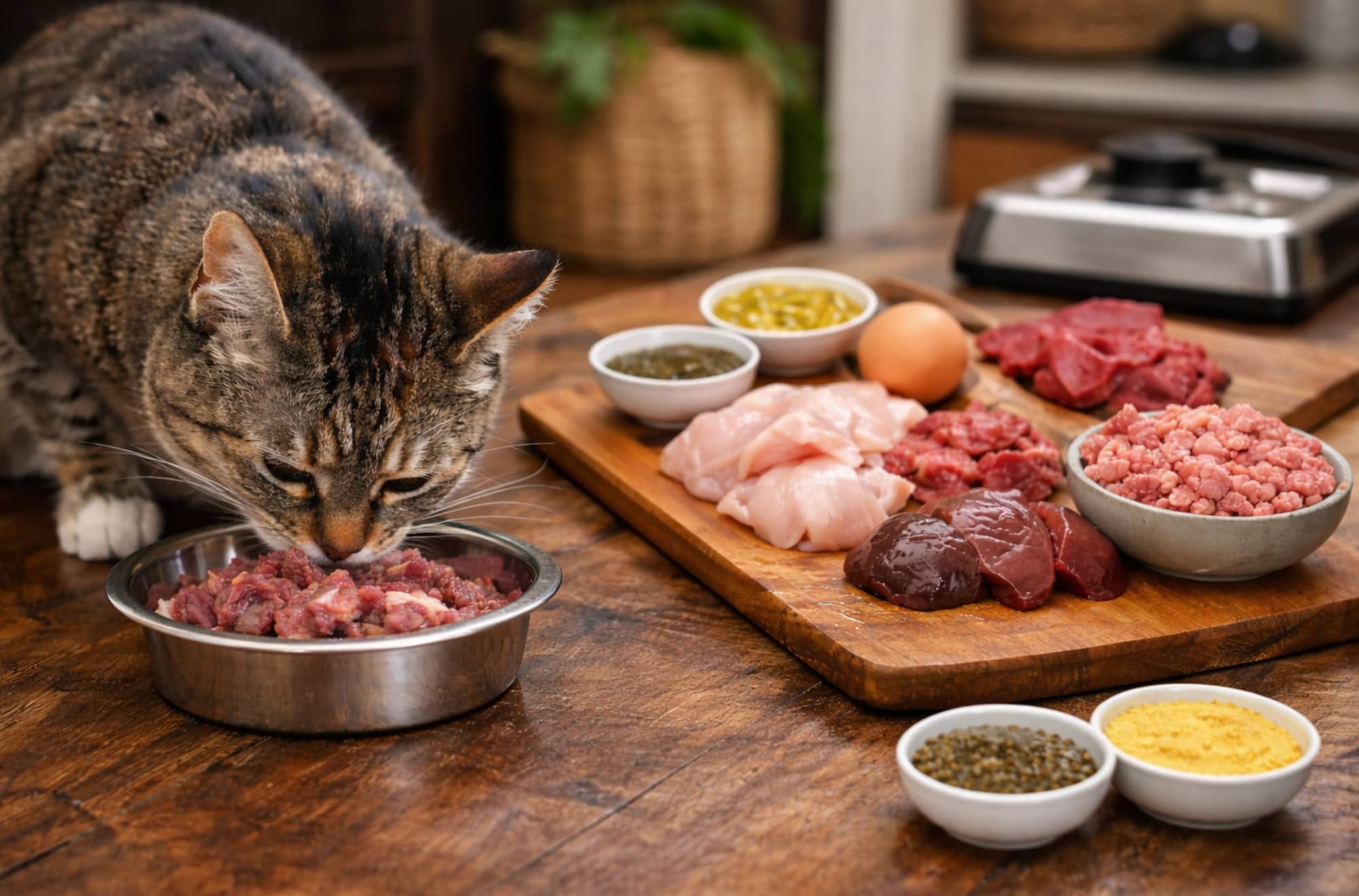
Switching food does not have to be stressful. A slow, steady transition lets you and your cat ease into raw with confidence.
A simple transition plan:
- Start with about 10 to 25 percent raw mixed into your cat’s familiar food.
- Every few days, increase the raw portion and decrease the old food, as long as stools stay normal.
- Aim for a full switch over 1 to 2 weeks, adjusting the pace based on your cat’s comfort.
Practical tips for success:
- Serve food at cool room temperature, not icy cold. Many cats dislike chilled meals.
- Feed measured portions so you can track appetite and body condition.
- Watch the litter box; stools should be formed and comfortable to pass.
- If your cat has loose stool, slow the transition and hold at that ratio until things settle.
At Rebel Raw, we created premade complete recipes to take the guesswork out of raw feeding. You do not need to juggle supplements, ratios, or grinder cleanup. You can focus on observing how your cat feels, eats, and behaves on fresh, species-appropriate food.
Ready to Explore Raw Feeding for Your Cat
A raw diet for cats is about feeding in a way that respects their natural design, with real meat, organs, and bone instead of ultra-processed pellets. Many cat parents see changes in digestion, litter box odor, coat quality, energy, and hydration when they switch to a balanced raw diet that is designed for everyday use.
If you are thinking about raw for your own cat, start by looking at how they are doing right now. Are they excited to eat, comfortable in the litter box, and glowing with health, or are there signs that food might be falling short? With a gradual transition, thoughtful vet support when needed, and balanced, human-grade recipes, it is possible to move toward a fresh, raw bowl in a way that feels doable and kind to both you and your cat.
Help Your Cat Thrive With Fresh, Species-Appropriate Nutrition
If you are ready to support your cat with real, unprocessed food, we are here to make it simple. Explore our curated raw diet for cats collections to find balanced meals tailored to your feline’s needs. At Rebel Raw, we carefully source and portion every recipe so you can feed with confidence. Start today and see how fresh, thoughtfully prepared food can transform your cat’s energy, digestion, and overall well-being.